

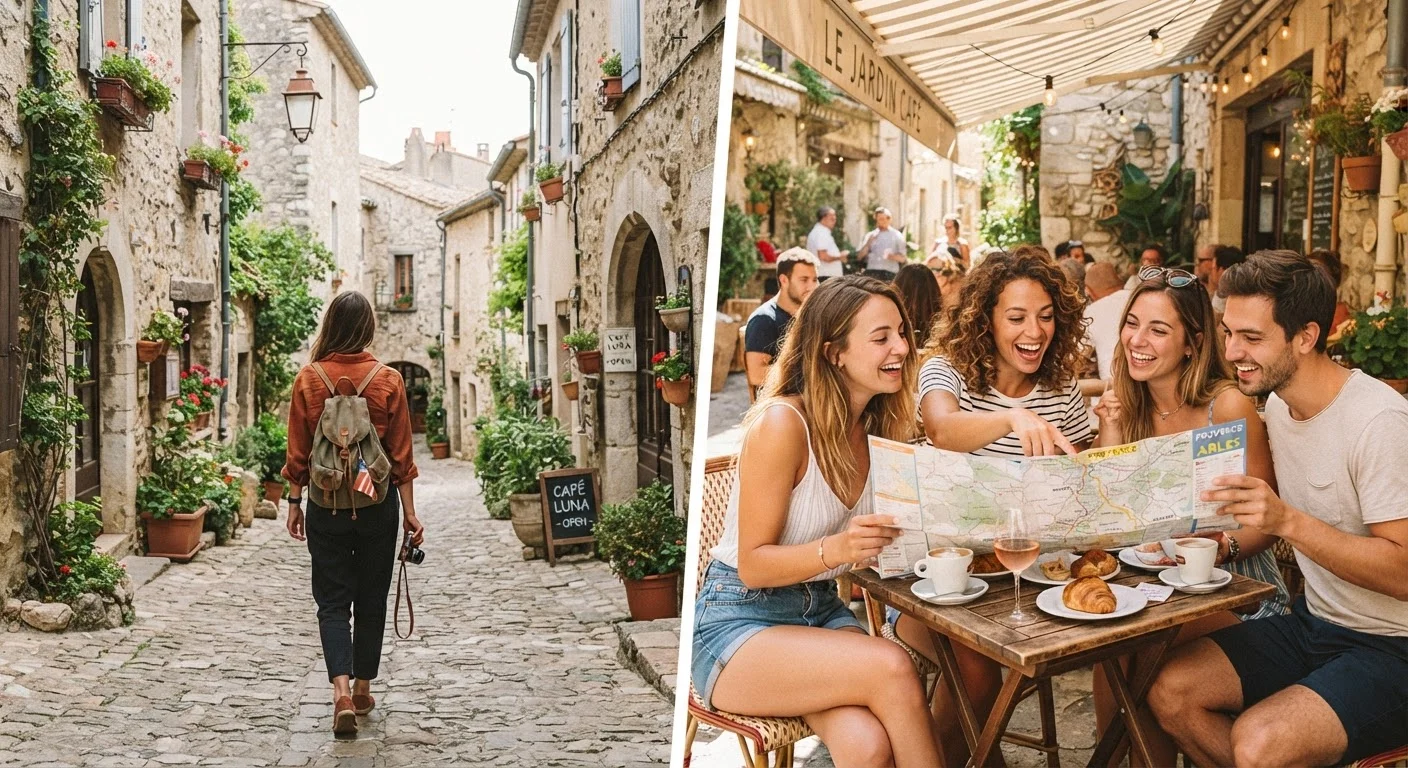
Key Takeaways
- Solo travel offers unmatched flexibility but places all logistical responsibility on one person.
- Group travel can lower per-person costs for lodging and transport but requires significant coordination.
- Decision fatigue is a real solo travel challenge; group trips face scheduling conflicts and differing priorities.
- Solo travelers benefit from lighter, faster itineraries; group itineraries need buffer time and shared buy-in.
- Safety considerations differ meaningfully between solo and group travel, especially in unfamiliar destinations.
- Neither style is universally better - the right choice depends on your travel goals and personal bandwidth.
Option A
Solo Travel
The self-directed, fully flexible approach to seeing the world.
Best for: Travelers who want complete control over their schedule, pace, and budget without needing group consensus.
Option B
Group Travel
The collaborative, shared-experience way to explore destinations.
Best for: Travelers who enjoy shared decision-making, splitting costs on accommodations and transport, and built-in social connection.
If you value spontaneity and hate negotiating every meal or activity
Solo Travel
You can change plans mid-day without consulting anyone, which suits travelers who thrive on improvisation and self-directed pacing.
If you want to share costs on accommodation and rental vehicles
Group Travel
Splitting a vacation rental or van among four to six people can substantially reduce per-person lodging and transport expenses.
If this is your first time visiting an unfamiliar or complex destination
Group Travel
Traveling with others provides built-in support for navigation, language barriers, and unexpected disruptions.
If you want a trip that aligns exactly with your personal interests
Solo Travel
Solo travel lets you spend as long as you want at a museum, skip activities that don't interest you, and eat wherever you choose.
If you're traveling for a milestone celebration with close friends or family
Group Travel
Shared experiences and collective memories are often the entire point of celebratory trips, making group logistics worthwhile.
How Each Planning Style Actually Works
Planning a solo trip and planning a group trip aren't just different in scale - they're different in kind. Understanding how each style functions from the start will help you choose the approach that matches your energy, your schedule, and your travel goals.
Solo planning is lean and fast. You set the destination, pick the dates, book your accommodation, and build your itinerary around your own interests. There's no approval process. The downside is that every decision lands on you - from researching visa requirements to figuring out airport transfers. That can be empowering or exhausting depending on your temperament. For practical guidance on structuring your days once you've committed to a destination, see our step-by-step itinerary guide.
Group planning starts with alignment. Before a single flight is booked, the group needs to agree on destination, dates, budget range, and travel style. That consensus phase takes real time and effort - often weeks of back-and-forth. Once the group is aligned, though, logistics like accommodation research, restaurant scouting, and activity booking can be distributed, which lightens individual load.
| Criterion | Solo Travel | Group Travel |
|---|---|---|
| Planning complexity | Low - one decision-maker | High - requires group consensus |
| Schedule flexibility | Maximum - change plans anytime | Limited - group must agree on changes |
| Per-person accommodation cost | Full single-occupancy rate | Reduced when splitting rooms or rentals |
| Problem-solving support | None on the ground | Shared among group members |
| Social connection | Must be actively sought | Built in from the start |
| Decision fatigue | High - every choice is yours | Lower individually, but conflict possible |
| Safety buffer | Relies on personal habits and preparation | Inherently higher with trusted companions |
Costs, Logistics, and Decision-Making
Cost dynamics shift dramatically between the two styles. Solo travelers pay the full rate for every hotel room, rental car, and private tour. Group travelers can split many of those fixed costs, often making vacation rentals, minivans, and boat charters far more economical per person. That said, group trips often expand in scope - a fancier rental, a longer stay - which can offset individual savings.
Logistically, solo trips are simpler to manage day-to-day but require you to handle every problem alone. A missed connection, a closed attraction, or a language barrier is yours to resolve. Group travel spreads that problem-solving across multiple people, but introduces coordination complexity: waiting on slower walkers, accommodating dietary restrictions, or managing someone who consistently runs late.
Decision fatigue is underappreciated in solo travel. Making every call - where to eat, how long to stay, which route to take - adds up over a multi-week trip. Group travel shifts some of that load but trades it for conflict management. If your group has different planning styles, it's worth reading our article on navigating mixed planning styles in a group.
1 in 4
American travelers who have taken a solo trip
A AARP Travel survey found roughly a quarter of American leisure travelers had traveled solo at least once in recent years.
40%+
Solo travelers who report higher trip satisfaction
Research published in travel behavior journals suggests solo travelers frequently rate personal growth and freedom as major satisfaction drivers.
2-4x
Longer pre-trip coordination for group travel
Travel planners commonly note that group trips require two to four times the pre-departure coordination compared to solo trips of similar length.
Safety, Social Experience, and Flexibility
Safety considerations are meaningfully different for solo versus group travelers. Solo travelers - particularly in unfamiliar cities or regions - carry more individual risk exposure. Simple habits like sharing your itinerary with someone at home, using secure document storage, and staying aware of your surroundings matter more when no one is there to watch your back. For a thorough rundown of low-stress safety practices, see our guide on solo travel safety habits.
Group travel provides a natural safety buffer: there's usually someone to notice if something seems off, help negotiate with locals, or stay with you if you're unwell. That said, groups can also create overconfidence - assuming someone else checked the local advisory or confirmed the tour operator's credentials.
On the social side, solo travel can feel isolating on long trips, but it also forces connection with locals and other travelers in ways group dynamics rarely allow. Group travel delivers built-in companionship but can make authentic local interaction harder. The format you choose should reflect which of those trade-offs you're more comfortable with. And regardless of which style you pick, don't underestimate the value of leaving some flexibility in your plans - our piece on planning less for a better trip makes a compelling case for breathing room in any itinerary.