

Key Takeaways
- Jet lag is a genuine physiological response, not just tiredness from a long flight.
- Traveling eastward is generally harder on the body than traveling westward.
- Light exposure is the most powerful tool for resetting your circadian rhythm.
- Staying hydrated and avoiding alcohol during flights can reduce symptom severity.
- Most people recover at a rate of about one time zone per day.
Jet Lag
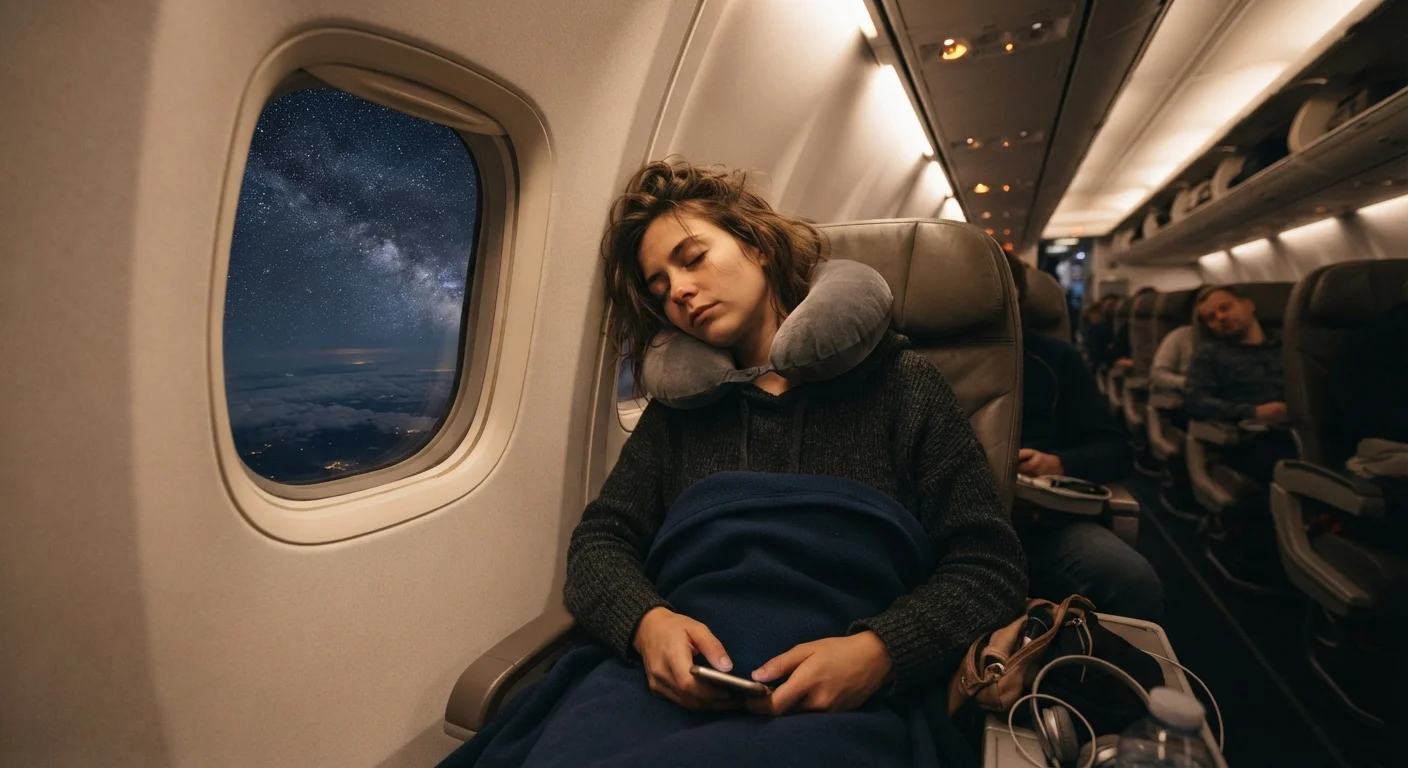
Jet lag is a temporary sleep disorder that occurs when your body's internal clock - known as the circadian rhythm - falls out of sync with the local time at your destination. It happens when you travel rapidly across multiple time zones, forcing your body to adjust to a new cycle of light and darkness faster than it naturally can. Symptoms typically include fatigue, difficulty sleeping, trouble concentrating, and digestive disruption.
Jet lag is classified as a circadian rhythm sleep-wake disorder. The suprachiasmatic nucleus (SCN) in the hypothalamus acts as the body's master clock and primarily synchronizes to light exposure, which is why light management is central to recovery strategies.
What's Actually Happening Inside Your Body
Your body runs on an internal clock that controls when you feel awake, hungry, and sleepy. This clock - the circadian rhythm - operates on roughly a 24-hour cycle and is calibrated primarily by light hitting specialized cells in your eyes. Those signals travel to the brain's suprachiasmatic nucleus, which coordinates hormone releases like cortisol (for alertness) and melatonin (for sleep readiness).
When you fly across multiple time zones in hours, your body's clock is still set to home time. Your destination's daylight and darkness cues don't match your internal schedule, so signals get sent at the wrong times. The result: you feel exhausted at noon, wide awake at 3 a.m., foggy-headed during meetings, and oddly hungry at odd hours. Digestion, immune function, and mood regulation are all tied to this rhythm and can be disrupted too.
The adjustment isn't instant because the body's clock shifts gradually - typically about one to two hours per day - meaning recovery from a six-hour time difference can take several days.
Why Direction of Travel Matters
Not all jet lag is equal. Eastward travel - say, New York to London - requires your body to move its clock forward, going to sleep and waking earlier than your internal rhythm wants. This runs counter to our biology: most people's internal clocks naturally run slightly longer than 24 hours, making it easier to stay up later (delay) than to sleep earlier (advance).
Westward travel, like Los Angeles to Tokyo heading west, asks the body to delay its clock - a more natural direction for most people. That's why many travelers report that eastbound long-haul flights hit harder than westbound ones of similar length.
Time Zones vs. Flight Duration
The number of time zones crossed matters more than distance or flight length alone. A transcontinental U.S. flight spanning three time zones will cause less circadian disruption than a transatlantic flight crossing five or more zones, even when total travel hours are similar. Always count time zone differences - not miles - when anticipating jet lag severity.
The number of time zones crossed matters more than distance. A transcontinental U.S. flight (three time zones) will cause less disruption than a transatlantic flight (five or more zones), even if the flight times are similar.
Practical Strategies to Ease the Transition
While there's no instant cure, several evidence-informed approaches can meaningfully reduce jet lag's severity:
- Shift your schedule before you leave. In the days before departure, gradually adjust your sleep and wake times 30-60 minutes in the direction of your destination's time zone. Even a two-hour shift before a six-hour difference helps.
- Use light strategically. Bright light is the strongest signal your body clock receives. On arrival, seek morning light if traveling east, or stay in bright afternoon light if traveling west. Avoid bright screens late at night when trying to advance your clock.
- Stay hydrated and limit alcohol. Cabin air is very dry, and dehydration intensifies fatigue. Alcohol and caffeine both disrupt sleep quality, making in-flight rest less restorative.
- Adapt to local time immediately. Eat meals, go outside, and try to sleep according to your destination's clock - not your home schedule - from the moment you arrive.
Building a consistent pre-sleep routine can also support recovery once you're at your destination. Our wind-down routine guide offers practical steps for signaling to your body that it's time to rest, which is especially useful when your circadian rhythm is out of sync.
Who Feels Jet Lag Most Acutely
Individual responses vary widely. Older adults tend to experience more pronounced symptoms and slower recovery because circadian rhythms become less flexible with age. Frequent long-haul travelers may develop more effective coping strategies over time, though their biology still responds to the disruption. People with existing sleep disorders or high baseline stress levels often find jet lag more disruptive.
Short trips can sometimes be counterproductive for recovery - if you're traveling for fewer than three days, some travel medicine experts suggest staying on home time if your schedule permits rather than attempting a full adjustment. For longer stays, full adaptation is generally worth the effort.
This article is for general informational purposes only and does not constitute medical advice. If you have concerns about sleep disorders or the impact of travel on a health condition, consult a qualified healthcare professional before your trip.