

Key Takeaways
- The Algarve suits beach-focused travelers but is heavily touristed from June through August.
- Lisbon rewards history and culture seekers but requires patience with crowds and hills.
- Porto offers a more compact, walkable city experience with strong food and wine credentials.
- Portugal's interior - including Alentejo and the Douro Valley - delivers authenticity at lower cost and crowd levels.
- Your travel priorities, pace, and budget should determine which region fits your trip.
Our Verdict
Portugal's regions are genuinely distinct in pace, landscape, cost, and crowd level. No single region is objectively superior - the right choice depends entirely on what kind of traveler you are and what you're hoping to take away from the trip.
| Best for | Recommended |
|---|---|
| Travelers prioritizing beach relaxation and warm weather | Algarve |
| History, architecture, and urban culture enthusiasts | Lisbon |
| Food, wine, and walkable city atmosphere seekers | Porto |
| Those seeking slower travel, lower costs, and fewer tourists | Portugal's Interior (Alentejo & Douro Valley) |
Why Portugal's Regions Feel Like Different Countries
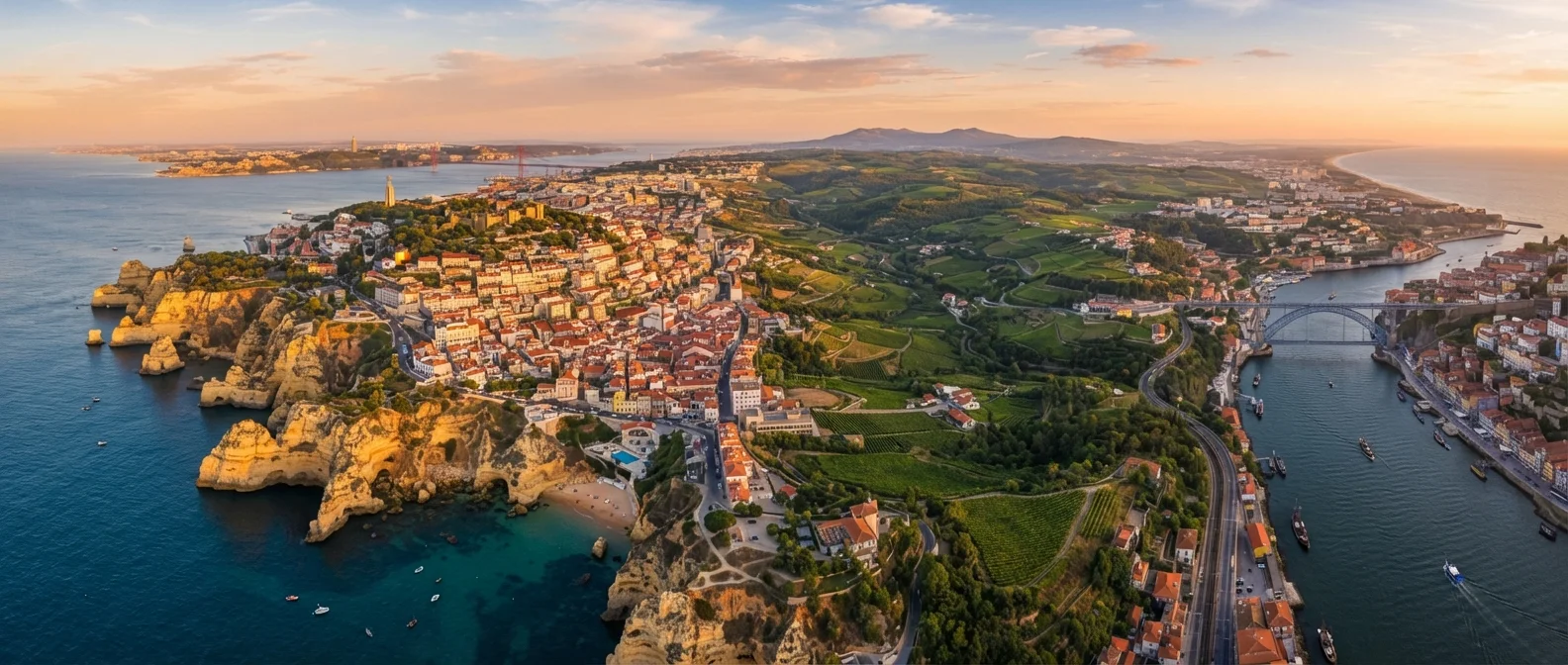
Portugal is roughly the size of Indiana, yet traveling between its regions can feel like crossing borders entirely. The Algarve's limestone sea cliffs share almost nothing - visually, culturally, or climatically - with the rolling cork forests of Alentejo or the granite hillsides terraced with vineyards above the Douro River. Understanding what each region actually delivers, rather than what marketing campaigns promise, is the most useful thing you can do before booking.
The four broad travel regions most visitors encounter are: the Algarve (southern coast), Lisbon and its surroundings (the capital area), Porto and the north, and the interior, which broadly covers Alentejo and the Douro Valley. Each has a clear identity, genuine strengths, and real trade-offs worth knowing.
Algarve: Beaches Without the Surprises
The Algarve is Portugal's most-visited region for a straightforward reason: its coastline is spectacular. Sculpted sandstone arches, hidden grottos accessible by kayak, and long Atlantic-facing beaches give it a visual drama few European coasts can match. The region's southern exposure means the most reliably warm, dry weather in mainland Portugal - typically sunny from April through October.
What the Algarve is not is undiscovered. Resort towns like Albufeira, Vilamoura, and Lagos absorb enormous visitor volumes in peak summer, and prices for accommodation reflect that demand. Travelers hoping for authentic local village life in July will need to look hard to find it. The western Algarve around Sagres is considerably quieter and appeals to surfers and those who prefer windswept scenery over beach clubs.
Peak Season Crowds Are Significant
July and August bring maximum visitor numbers across all four regions, with the Algarve and Lisbon feeling the strain most acutely. Accommodation prices spike and availability tightens. If your travel dates are flexible, shoulder season - April through early June, or September through October - generally offers better value, more manageable crowds, and comfortable temperatures.
Transport within the Algarve is easiest with a rental car. The coastal train line connects Faro to Lagos but misses many beach access points, and bus service to smaller villages is infrequent.
Lisbon: Urban Depth at the Cost of Comfort
Lisbon is one of Western Europe's most historically layered capital cities. Neighborhoods like Alfama - the old Moorish quarter - and Belém, where the Age of Exploration launched, offer genuine cultural weight. The city's fado music tradition, its azulejo tile-covered facades, and its position at the mouth of the Tagus estuary all contribute to an atmosphere that's hard to replicate.
The practical realities: Lisbon is hilly in ways that catch first-time visitors off guard. Its famous trams are frequently overcrowded. The most photographed neighborhoods (Alfama, Mouraria, Bairro Alto) have seen sharp rises in short-term rental accommodation, which has changed their character noticeably. Day trips to Sintra and Cascais are genuinely worthwhile but add logistics and cost. Budget travelers will find Lisbon more expensive than Porto, and significantly pricier than the interior.
Porto: A Smaller Scale That Works in Your Favor
Porto operates at a scale that suits independent travelers well. The historic center (a UNESCO World Heritage Site) is compact enough to explore on foot over two or three days. The Douro River waterfront - the Ribeira district - provides the city's most iconic views, and the São Bento train station alone justifies a visit for its extraordinary azulejo tile panels depicting Portuguese history.
Porto's food scene punches well above its size: the city is the home of francesinha (a layered meat sandwich in spiced tomato-beer sauce), fresh seafood, and easy access to the Port wine lodges across the river in Vila Nova de Gaia. Day trips into the Douro Valley wine country are among Portugal's most scenic train journeys. Porto tends to run 10-20% less expensive than Lisbon for accommodation and dining, though it has closed that gap in recent years.
| Algarve | Lisbon | Porto | Interior (Alentejo/Douro) | |
|---|---|---|---|---|
| Primary draw | Beaches & coastline | History & urban culture | Food, wine & compact city | Landscape & authenticity |
| Crowd level (peak season) | Very high | High | Moderate-high | Low to moderate |
| Relative cost | High in summer | High year-round | Moderate | Low to moderate |
| Best season to visit | Apr-Jun, Sep-Oct | Mar-May, Sep-Nov | May-Oct | Apr-Jun, Sep-Oct |
| Getting around | Car recommended | Metro & tram | Walkable + metro | Car essential |
| Day trip options | Sagres, Tavira | Sintra, Cascais | Douro Valley, Guimarães | Évora, Monsaraz |
The Interior: Alentejo and Douro Valley
Portugal's interior remains undervisited relative to its coastal counterparts, which is precisely what makes it appealing. Alentejo - the vast region south and east of Lisbon - is a landscape of wheat plains, cork oaks, and whitewashed medieval villages like Évora (another UNESCO site) and Monsaraz. It is also Portugal's primary wine-producing heartland outside the Douro. Accommodation costs are meaningfully lower, and the pace of life is slow in a way that feels earned rather than performed.
The Douro Valley, accessed most easily from Porto, is a working wine region shaped by centuries of terrace farming carved into schist hillsides. Visiting by train or boat gives a perspective the road doesn't. Neither region has a significant beach offering, so travelers whose trip satisfaction hinges on swimming should weigh that honestly. For those drawn to food, wine, landscape, and history without the summer crowds, the interior often ends up being the trip's unexpected highlight.