
Coastal vs. Mountain Caribbean: Choosing Between Beach and Highland Destinations

Key Takeaways
- Coastal Caribbean destinations offer warm temperatures year-round, ideal for water sports and beach relaxation.
- Highland areas like Jamaica's Blue Mountains sit noticeably cooler-sometimes 20°F lower-than coastal zones.
- Mountain destinations typically see heavier rainfall and more variable weather than low-lying coastal resorts.
- Coastal areas dominate tourism infrastructure; highland zones tend to offer fewer but more intimate lodging options.
- Hidden costs can differ significantly between destination types-always budget for transfers, entrance fees, and guide services.
- Your ideal Caribbean trip depends on activity priorities, tolerance for heat and humidity, and travel pace.
Option A
Coastal Caribbean
The classic sun-and-sea Caribbean experience.
Best for: Travelers seeking warm weather, water activities, resort amenities, and easy relaxation on tropical beaches.
Option B
Mountain Caribbean
A cooler, culture-rich alternative to the shoreline.
Best for: Travelers who want hiking, local ecosystems, coffee culture, and a quieter pace away from beach crowds.
If you want classic beach relaxation and water sports
Coastal Caribbean
Sandy beaches, calm turquoise water, and established resort infrastructure make coastal destinations straightforward choices for sun-seekers.
If you prefer hiking, birding, or nature exploration
Mountain Caribbean
Highlands like Jamaica's Blue Mountains and Dominica's interior offer rich biodiversity, cool air, and trails that coastal resorts simply cannot match.
If you're sensitive to heat and high humidity
Mountain Caribbean
Elevations above 3,000 feet can be dramatically cooler and less humid, providing meaningful physical relief compared to coastal lowlands.
If you're traveling with children or first-time Caribbean visitors
Coastal Caribbean
Greater availability of family-oriented amenities, accessible beaches, and predictable logistics makes coastal areas easier to navigate for groups.
If you want cultural immersion and local community interaction
Mountain Caribbean
Highland communities often offer direct engagement with farming traditions, local cuisine, and artisan culture that busy resort towns rarely replicate.
Two Very Different Versions of the Caribbean
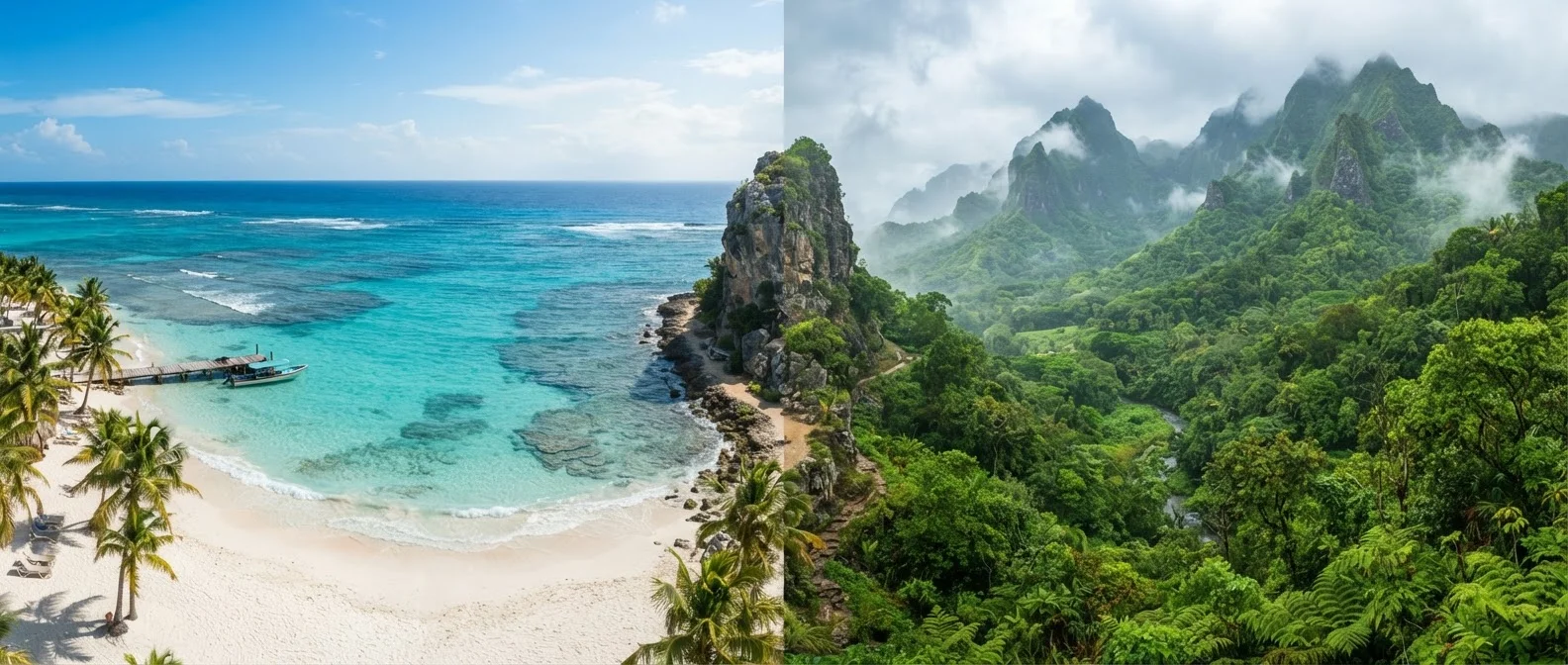
When most Americans picture the Caribbean, they imagine white sand, turquoise water, and a beach chair. That image is accurate for coastal destinations - but it's only part of the story. Islands including Jamaica, Dominica, St. Lucia, and Puerto Rico contain substantial mountain interiors that offer a dramatically different travel experience.
Understanding what each environment actually delivers - before you book - helps you avoid a mismatch between expectations and reality. Whether you're drawn to the shoreline or the highlands, the Caribbean can accommodate both, often within the same island. The key is knowing what trade-offs come with each choice. Before departure, always verify entry requirements and travel conditions with official sources - see our guide on checking a destination's readiness before you travel for a useful pre-trip checklist.
Climate and Weather: Heat, Humidity, and Altitude
Coastal Caribbean destinations sit near or at sea level, where temperatures typically range from the mid-70s to the low 90s°F year-round. Humidity is consistently high. The trade winds that sweep many islands provide some relief, but travelers sensitive to heat will feel it continuously along the shore.
Mountain zones operate under completely different conditions. Jamaica's Blue Mountains peak above 7,400 feet, and temperatures there regularly drop into the 50s°F at night. Dominica's interior rainforest receives some of the highest annual rainfall in the Caribbean. Mist, cloud cover, and cooler daytime highs are routine - not occasional - in these environments.
Rainfall patterns also differ. Coastal zones generally experience drier conditions on their leeward (western) sides. Mountain interiors, by contrast, catch orographic rainfall as trade winds push moisture upward - meaning highland areas can be wet even during what's technically the dry season on the coast.
| Criterion | Coastal Caribbean | Mountain Caribbean |
|---|---|---|
| Typical temperature range | Mid-70s to low 90s°F | 50s to mid-70s°F |
| Humidity level | High, consistent | Variable; cooler but often wet |
| Primary activities | Swimming, diving, sailing | Hiking, birding, farm visits |
| Accommodation variety | Extensive; resorts to boutique hotels | Limited; guesthouses and eco-lodges |
| Infrastructure and amenities | Well-developed and accessible | Basic; varies significantly by island |
| Transportation to destination | Direct from airport; easy | Additional ground transfer required |
| Crowd levels | Higher, especially near resorts | Generally quieter and less visited |
| Rainfall pattern | Seasonal; drier on leeward sides | Heavy and less predictable year-round |
Activities and Experiences: Sand vs. Summit
Coastal destinations are optimized for water-based recreation: snorkeling, diving, sailing, paddleboarding, and simply swimming. The logistical ease is real - gear rentals, instructors, and guided excursions are widely available at most established resort areas. Nightlife, restaurants, and shopping also concentrate near coastlines.
Highland destinations reward a different kind of traveler. The Blue Mountains in Jamaica are known for exceptional bird-watching - the island's endemic birds, including the Streamertail hummingbird, are far more accessible there than at sea level. The area is also home to Jamaican Blue Mountain coffee production, and farm visits offer genuine cultural context you won't find poolside. Dominica's Boiling Lake hike and Morne Trois Pitons National Park attract serious trekkers from around the world.
It's worth noting that hidden travel costs can look different between these destination types. Coastal resorts often layer on resort fees, beach chair charges, and water sports add-ons. Highland travel tends to involve transportation costs, guide fees for trails, and gear considerations for cooler, wetter conditions.
Infrastructure and Accessibility
Coastal areas dominate Caribbean tourism infrastructure. Major airports, ferry terminals, international hotel chains, all-inclusive resorts, and medical facilities cluster near the shore. For travelers with mobility considerations, accessibility features are far more common at coastal properties than in highland areas.
Mountain destinations typically require additional ground transportation - sometimes on winding, narrow roads - after you've already arrived on-island. Accommodations in highland zones tend to be smaller guesthouses, eco-lodges, or coffee estate stays. These offer character and intimacy, but fewer standardized amenities. Internet connectivity and emergency services may also be more limited at elevation.
Verify Conditions Before You Go
Road conditions in Caribbean mountain areas can change significantly after heavy rain, and some highland trails require advance permits or guided access. Infrastructure and service availability in interior regions vary widely between islands and can shift seasonally. Always check current advisories and ground conditions through official tourism boards or government travel resources before finalizing highland itineraries.
Timing your trip also plays a role in what either environment delivers. For guidance on how seasons affect crowds and pricing across Caribbean destinations, the comparison in shoulder season vs. peak season travel is worth reading before you decide when to go.
Which Caribbean Should You Choose?
Neither coastal nor mountain Caribbean is objectively superior - they serve genuinely different travel goals. If your priority is unwinding, water activities, or traveling with people who need reliable amenities, coastal destinations are the clear practical fit. If you want physical activity, ecological variety, cooler temperatures, and encounters with local culture and agriculture, highland zones offer experiences that shoreline resorts simply can't replicate.
Many travelers find the most satisfying Caribbean trips combine both: two or three days in the mountains followed by beach time, or vice versa. If you're weighing broader vacation format questions - not just destination type - the framework in road trip vs. fly-and-stay vacations is a useful reference for thinking through structure before you commit.
Whatever you choose, arrive with accurate expectations. Research the specific island's geography, verify weather patterns for your travel window, and understand the infrastructure available at your chosen elevation. The Caribbean's diversity is its strength - but only travelers who understand that diversity will make the most of it.