

Key Takeaways
- Overnight charging rarely damages modern smartphones due to built-in charge management circuits.
- Draining your battery to zero before recharging actually shortens lithium-ion battery lifespan.
- Certified third-party chargers are generally safe; uncertified no-name chargers carry real risk.
- Heat, not charging frequency, is the biggest threat to long-term battery health.
- Fast charging is convenient but using it constantly can add modest wear over time.
Why So Many Charging Myths Persist
Smartphone battery technology changed fundamentally when the industry shifted from nickel-cadmium and nickel-metal-hydride cells to lithium-ion chemistry in the early 2000s. The rules that once governed battery care became obsolete practically overnight - but the habits people had built stuck around. Add to that the speed at which phone manufacturers release updated charge management software, and it becomes easy to see why yesterday's advice keeps circulating as today's fact.
Understanding what's actually happening inside your phone's battery makes it easier to filter out the noise. Most of the guidance below applies to any modern smartphone using lithium-ion or lithium-polymer cells, which covers the overwhelming majority of devices on the market. For guidance on other consumer tech myths, the same logic applies - see our look at internet service myths for a comparable breakdown in a different category.
Common Charging Myths - Corrected
The myths below are among the most widely repeated, and each one is grounded in either outdated battery science or a misunderstanding of how modern charge management works. Getting these straight won't just protect your battery - it'll save you the daily inconvenience of habits that aren't actually helping.
Myth
You should always drain your battery to 0% before recharging to keep it healthy.
Fact
Fully depleting a lithium-ion battery regularly shortens its overall lifespan, not the reverse.
This idea carried over from older nickel-cadmium (NiCd) batteries, which genuinely did benefit from full discharge cycles to avoid a phenomenon called memory effect. Lithium-ion batteries - the chemistry used in virtually every modern smartphone - work on an entirely different principle. They are rated for a limited number of full charge cycles, and each time you drain from 100% to 0%, you use up one full cycle. Keeping your phone between roughly 20% and 80% charge uses only a fraction of a cycle each time and extends overall capacity retention over the battery's life.
Myth
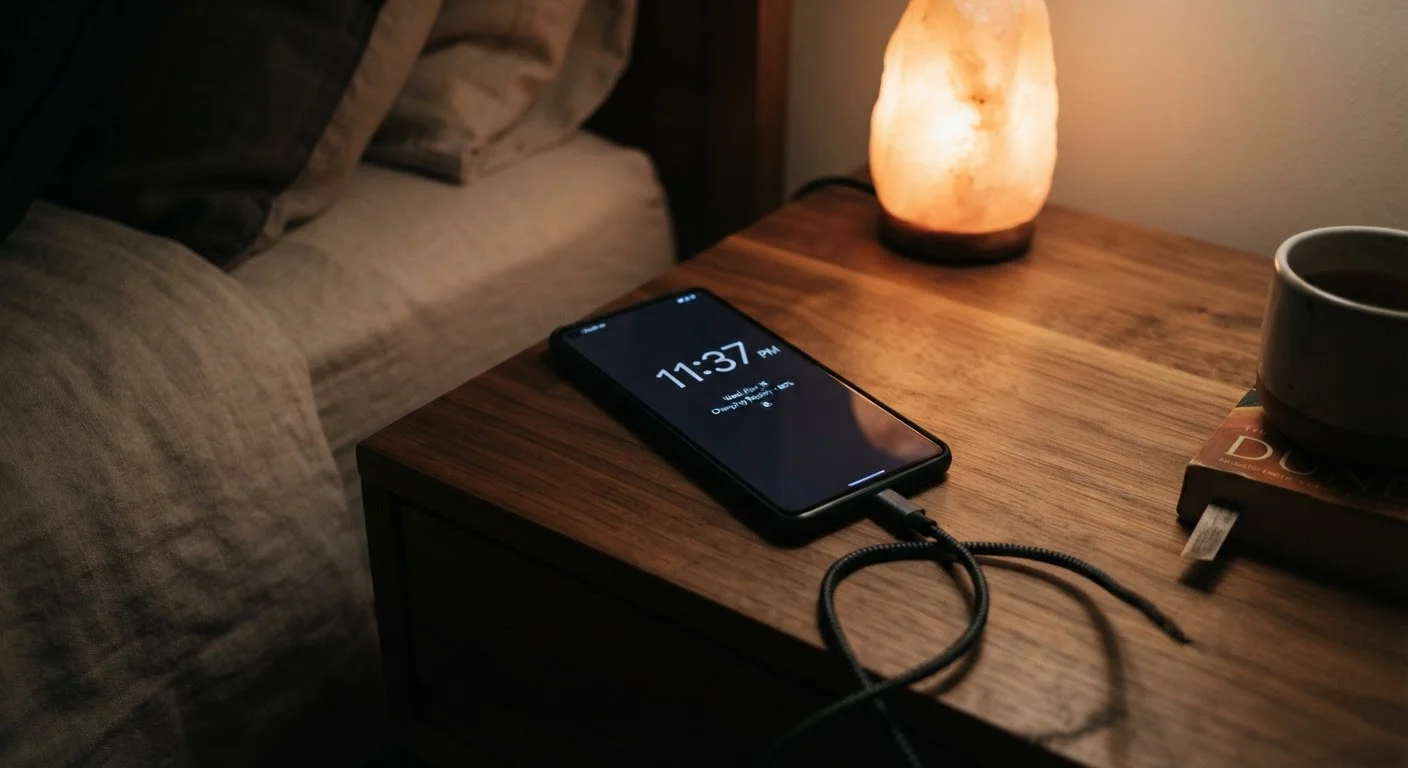
Leaving your phone plugged in overnight will overcharge and ruin the battery.
Fact
Modern smartphones stop actively charging once they reach 100% - the charger cannot force more electricity into the cell.
Every contemporary smartphone contains charge management circuitry that cuts off the charging current when the battery is full. The phone then draws power directly from the charger rather than the battery. Some manufacturers go further: Apple's Optimized Battery Charging and Android's Adaptive Charging features learn your sleep schedule and deliberately pause charging at 80%, completing the final stretch just before your typical wake time. The real concern with overnight charging is heat, not overcharge - keeping a phone at 100% for extended periods in a warm environment adds mild stress, but it's a far smaller factor than temperature spikes from direct sunlight or hot surfaces.
Myth
Using a charger that didn't come in the box will damage your phone.
Fact
Chargers that carry recognized safety certifications and support your phone's charging standards are generally safe to use.
The key distinction is between certified and uncertified third-party chargers - not between brand-name and generic. Reputable accessory manufacturers submit their chargers for independent safety testing (look for UL, CE, or similar certification marks). These products are engineered to deliver stable voltage and current within safe parameters. Cheap, uncertified chargers sourced from unknown suppliers often skip this testing and can deliver inconsistent power, overheat, or fail in ways that damage devices. The brand on the box matters far less than the certification mark on the charger itself.
Myth
Fast charging damages your battery significantly faster than standard charging.
Fact
Fast charging adds some extra heat and wear, but the effect is modest when it isn't used exclusively for every single charge.
Fast charging works by delivering higher wattage during the early portion of a charge session - most implementations taper down to a slower rate as the battery approaches full capacity. This higher wattage does generate more heat than a standard 5W or 10W charger, and heat is genuinely stressful for lithium-ion cells. However, battery engineering and thermal management have improved substantially, and using fast charging occasionally rather than exclusively has a limited practical impact on the battery's usable life over two or three years of normal ownership. If battery longevity is a priority, using a slower charger overnight is a reasonable habit - but fear of fast charging shouldn't prevent you from using a convenient feature when you need a quick top-up.
Myth
Wireless charging is worse for your battery than wired charging.
Fact
Wireless charging is slightly less efficient and generates marginally more heat, but the real-world impact on battery health is minimal for typical users.
Wireless (inductive) charging converts electrical energy to a magnetic field and back again, which inherently involves a small energy loss compared to a direct wired connection - resulting in slightly more heat at the coil. Some research has shown marginally higher temperatures during wireless charging compared to wired at equivalent wattages. In practice, the difference in battery degradation between the two methods is small enough that it rarely determines whether a phone retains acceptable capacity through a typical two-to-three-year ownership period. Keeping the phone out of cases that trap heat while wirelessly charging is a more impactful precaution than avoiding wireless charging altogether.
Heat Is the Silent Battery Killer
Leaving your phone in a hot car, on a sun-exposed surface, or under a pillow while charging exposes the battery to temperatures that degrade capacity permanently. Lithium-ion cells lose measurable capacity when repeatedly exposed to heat above roughly 95°F (35°C). Keep your phone in cool, ventilated spots during charging whenever possible.
For more on how misconceptions in consumer tech categories can affect daily decisions and costs, see the Phones & Plans hub for plain-language coverage of smartphones and mobile options.
What Actually Protects Your Battery Long-Term
Stripping away the myths leaves a short list of genuinely useful practices. Keep your charge level in the middle range when possible - the 20%-80% window is a reasonable target, though staying within it obsessively isn't necessary. Avoid sustained heat exposure, which is the single largest controllable factor in battery degradation. Use certified chargers. And treat fast charging as a convenient tool rather than either a daily default or something to fear.
Modern phones are also increasingly transparent about battery health - both iOS and Android provide battery health readouts in settings that give you an objective measure of how your battery is holding up over time, removing the guesswork entirely.
Uncertified Chargers Can Cause Real Harm
Not all third-party chargers are created equal. Chargers lacking recognized safety certifications (such as UL listing) have been linked to overheating, device damage, and in rare cases, fire. Always look for safety certification marks on any charger you use - the risk isn't theoretical.
The same skepticism that helps with phone charging myths is worth applying elsewhere - our coverage of car ownership myths shows how similar folklore takes hold in other everyday categories.