

Key Takeaways
- Kitchen and bathroom updates consistently rank among the highest-return renovations for resale.
- Highly personalized upgrades - like luxury home theaters - rarely recover their full cost at sale.
- Deferred maintenance repairs typically matter more to buyers than cosmetic enhancements.
- Neighborhood price ceilings can cap the return on even well-executed improvements.
- Permits and proper documentation of completed work protect resale value and reduce buyer hesitation.
Why Renovation Return Rates Vary So Widely
Homeowners spend billions each year upgrading their properties, often with the expectation that the investment will come back at closing. The reality is more nuanced. Industry data consistently shows that renovation cost-to-value ratios vary significantly depending on the project type, the local market, and how well the upgrade fits the home's existing character and price tier.
Understanding which improvements tend to translate into actual resale value - and which mostly serve the current occupant - is one of the smarter questions a homeowner can ask before writing a check. It's a topic covered broadly in the home improvement space, but rarely with enough grounding in what buyers actually pay for.
One foundational principle: buyers absorb homes as complete packages. A spectacular kitchen in a home with deferred mechanical problems, or a luxury addition in a neighborhood of modest bungalows, rarely commands a proportional premium. Context is everything.
The Neighborhood Price Ceiling Effect
Even well-executed renovations can hit a ceiling imposed by surrounding home values. If your home is already at or near the top of its neighborhood's price range, additional improvements may add comfort but are unlikely to push the sale price significantly higher. Appraisers and buyers both anchor value comparisons to nearby sales. This is one reason why the same project can yield different returns in different ZIP codes.
Projects That Tend to Hold or Build Value
Minor kitchen refreshes
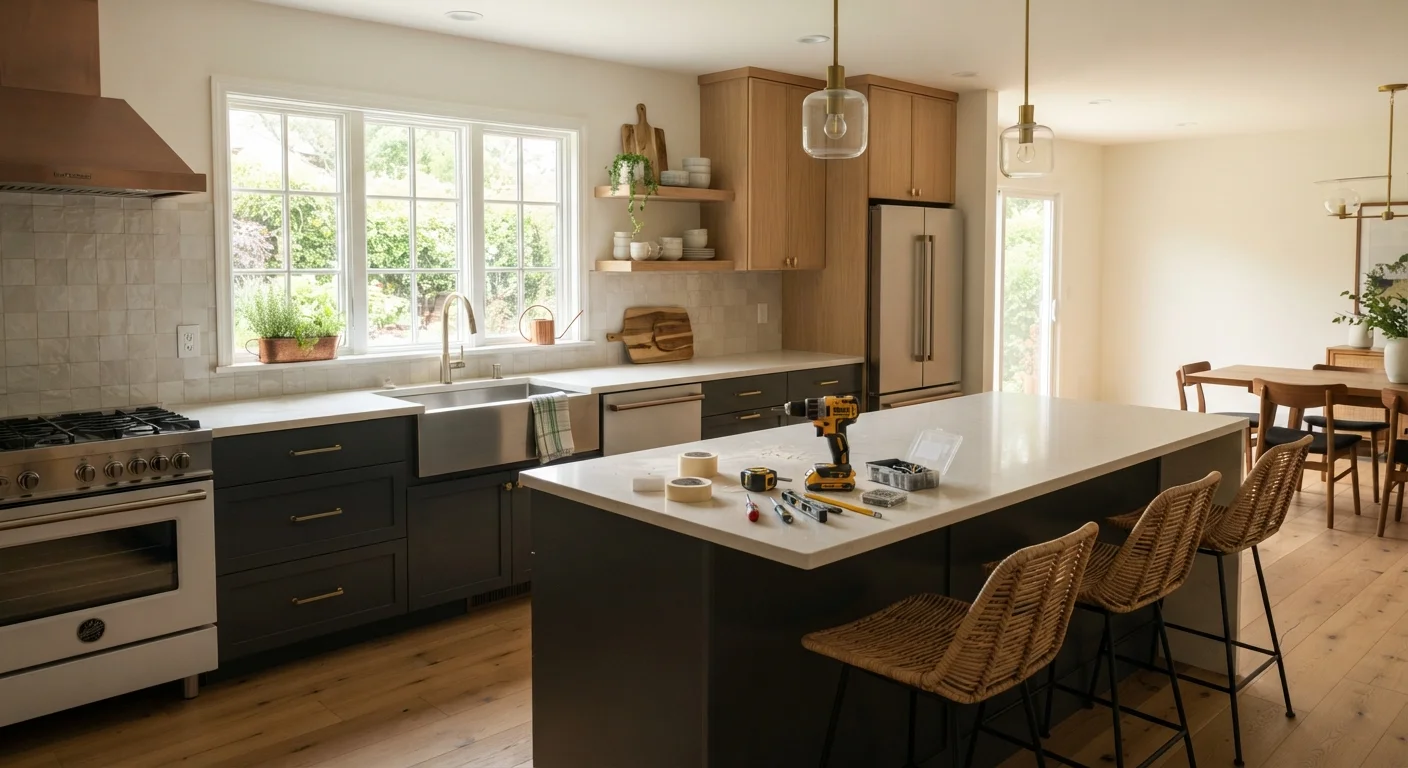
Full kitchen gut renovations rarely recoup their full cost, but targeted refreshes - new hardware, updated fixtures, resurfaced countertops, or cabinet repainting - tend to offer stronger return relative to spend. Buyers respond to kitchens that feel clean and functional without requiring immediate work. If you're weighing how far to go, comparing cabinet refacing, repainting, and replacement can help calibrate the decision.
Targeted kitchen refreshes often outperform full gut renovations on a cost-to-value basis.
Bathroom updates
Dated bathrooms are one of the first things buyers notice. Replacing worn fixtures, re-grouting tile, updating vanities, or improving ventilation are relatively low-cost changes that signal care and move a home closer to market expectations. Mid-range bathroom remodels have historically recovered a meaningful share of their cost, though results vary by market and execution quality.
Bathroom updates signal careful ownership and help a home meet buyer expectations at showing time.
Curb appeal and exterior maintenance
First impressions set the tone for everything that follows. Fresh exterior paint, a maintained lawn, repaired walkways, and updated entry doors consistently rank among the higher-return exterior improvements. Garage door replacement in particular has shown strong cost recovery in multiple Remodeling Magazine Cost vs. Value surveys - partly because it's visible, functional, and buyers notice when it looks worn.
Curb appeal improvements often pay above-average returns because they shape buyers' first impressions.
Mechanical systems and structural repairs
Replacing an aging HVAC system, upgrading electrical panels, or repairing a failing roof are not glamorous investments - but they matter enormously to buyers and inspectors. Homes with deferred mechanical issues tend to either stall in negotiation or sell at discounts that exceed what the repair would have cost. Deferred maintenance compounds in ways that erode both value and negotiating position.
Unresolved mechanical problems cost more at sale time than they would have cost to fix proactively.
Highly personalized upgrades
Home theaters, elaborate wine cellars, custom murals, or niche hobby rooms appeal deeply to their owners but represent a narrower segment of buyers. When the market for a feature is small, sellers often recover only a fraction of the investment - if any. This isn't an argument against building spaces you'll genuinely use and enjoy, but rather a realistic framing: these projects are lifestyle investments, not financial ones.
Niche personalization improves daily living but rarely translates into proportional sale price gains.
Swimming pools
In certain climates and price tiers, a pool is an expected feature that helps a home compete. In others, it can actually narrow the buyer pool - families with young children, owners who don't want the maintenance burden, and buyers aware of insurance and upkeep costs may pass on a property specifically because of a pool. Local market norms matter enormously here, and it's worth consulting a local real estate professional before proceeding.
Pool value is highly market-dependent - in some areas it helps, in others it limits buyer interest.
Sunrooms and home additions
Adding square footage sounds straightforward, but additions rarely recoup their full construction cost at resale. Costs run high, permitting is complex, and the added value is capped by what comparable homes in the neighborhood sell for. Structural changes like opening floor plans carry similar trade-offs - what improves livability doesn't always translate dollar-for-dollar into appraised value.
Additions add comfort and space but are typically capped in value by the surrounding neighborhood's price range.
Making Smarter Decisions Before You Start
Before committing to any major project, it's worth examining whether the improvement serves your own enjoyment, your resale position, or both - and being honest about which matters most right now. As explored in renovation myths that cost homeowners real money, assuming all upgrades add value is one of the costlier beliefs in homeownership.
Permits deserve particular attention. Unpermitted work - even when done well - can complicate a sale, trigger renegotiation, or require costly remediation. Understanding the permit process before breaking ground is a practical step that protects your investment long-term.
Finally, don't overlook the baseline. Buyers consistently prioritize a well-maintained home over a heavily upgraded one with neglected fundamentals. A thoughtful annual home maintenance routine often does more for resale positioning than a discretionary renovation. For a broader framework on treating your home as a long-term financial asset, see managing a home as a long-term asset.
This article is for general informational purposes only and does not constitute financial, legal, or real estate advice. Consult a licensed real estate professional or financial adviser for guidance specific to your circumstances.