

Key Takeaways
- A buyer's agent legally represents your interests, not the seller's - that distinction matters in negotiations.
- Their role extends well beyond scheduling tours: they analyze comps, flag property issues, and manage contract timelines.
- Compensation structures have shifted; buyers should understand how their agent is paid before signing any agreement.
- Going without an agent is legally allowed but carries real risk, especially for first-time buyers in complex transactions.
- In certain simple scenarios - such as new construction with a familiar builder - unrepresented buyers may fare reasonably well with proper preparation.
Buyer's Agent
A buyer's agent is a licensed real estate professional who represents the homebuyer - not the seller - throughout the purchase process. Their job is to help you find suitable properties, evaluate them fairly, negotiate on your behalf, and navigate the paperwork from offer to closing. Unlike a listing agent, their fiduciary duty runs to you, the buyer.
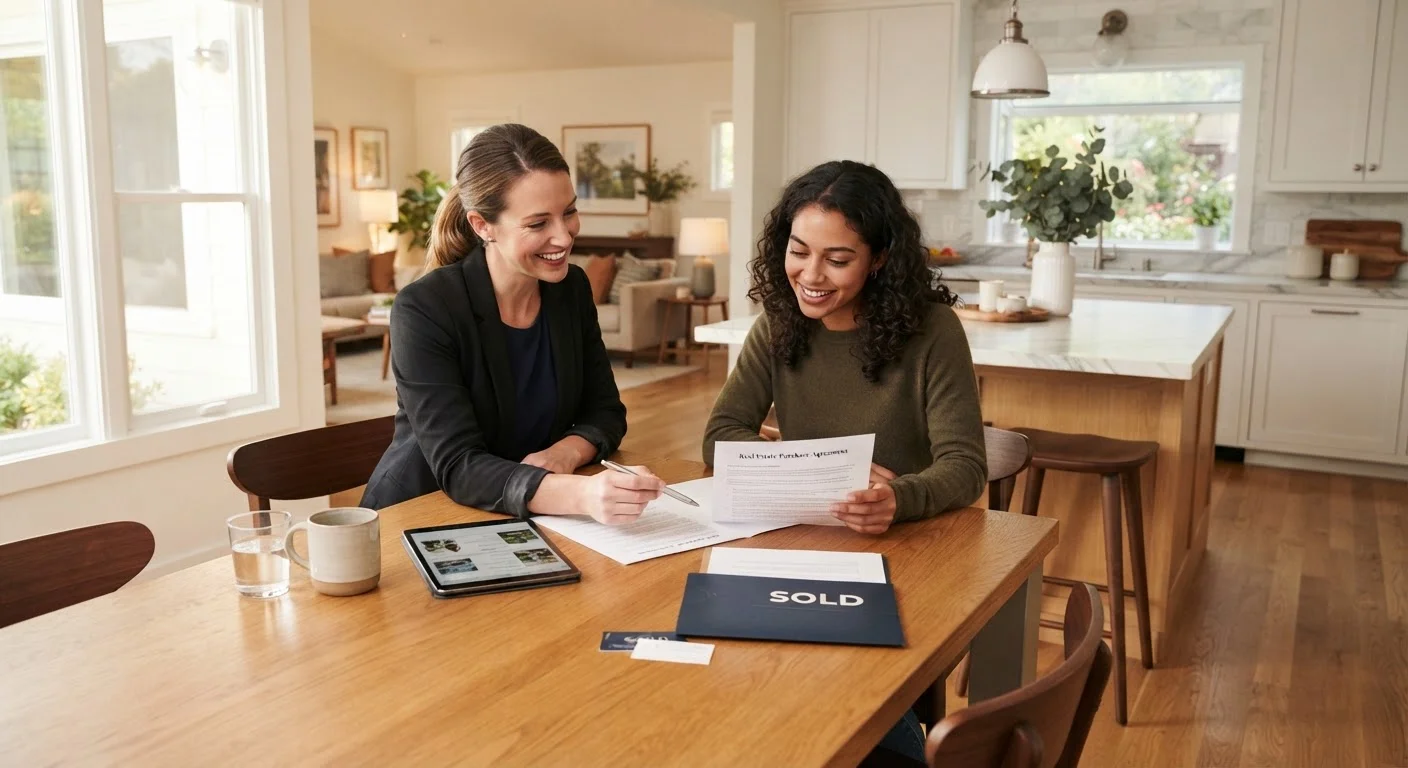
In most states, a buyer's agent relationship is formalized through a buyer representation agreement, which outlines the agent's duties, the term of the arrangement, and compensation expectations - a detail that has become more prominent following recent industry settlement changes.
What a Buyer's Agent Actually Does Day to Day
Many homebuyers assume a buyer's agent mainly schedules property tours. In reality, that's a small slice of the job. Before you ever walk through a door, a buyer's agent is researching active listings, cross-referencing your criteria, and screening out properties that don't genuinely fit - saving you time and preventing impulse decisions.
Once you've identified a target home, the agent's analytical work begins in earnest. They pull comparable sales (often called "comps") - recent nearby transactions - to evaluate whether a listing price is fair, high, or low relative to the market. This analysis directly shapes how you approach your offer. Make sure you're familiar with key real estate terms like comps, contingencies, and escrow before going into negotiations.
From offer through closing, a buyer's agent manages a dense series of deadlines: inspection windows, appraisal timelines, financing contingencies, and title review periods. Missing any of them can cost you your earnest money deposit or derail the deal entirely. The agent coordinates with lenders, title companies, inspectors, and the seller's agent - acting as your project manager through a process that typically spans 30 to 60 days.
Ask for a Walkthrough of the Representation Agreement
Before committing to a buyer's agent, ask them to walk you through their standard representation agreement line by line. Pay close attention to the compensation clause, the exclusivity period, and any early-termination provisions. A trustworthy agent will welcome the questions - not deflect them.
How Buyer's Agents Are Compensated
For decades, the seller paid both their own agent and the buyer's agent from sale proceeds - buyers rarely saw a direct bill. That structure has been changing. Following a 2024 legal settlement involving the National Association of Realtors, new rules require buyers to sign a written agreement with their agent before touring homes, and compensation must be negotiated explicitly rather than assumed.
In practice, many sellers still offer a buyer-agent commission as part of their marketing strategy - it remains a common incentive to attract more offers. But buyers can no longer assume coverage. Before signing a buyer representation agreement, ask: what is the compensation rate, who is expected to pay it, and what happens if the seller offers less than that amount? Understanding these terms protects you from surprises at the closing table.
88%
Homebuyers who used an agent to purchase
According to the National Association of Realtors' 2023 Profile of Home Buyers and Sellers, 88% of recent buyers purchased through a real estate agent or broker.
6%
Typical combined agent commission (historically)
The traditional combined buyer-seller agent commission has hovered around 5-6% of the sale price, though rates vary by market and are now more openly negotiable.
7%
Share of homes sold FSBO in 2023
The NAR 2023 report found that 7% of home sales were for-sale-by-owner transactions, continuing a long-term decline from higher historical rates.
When You Might Be Fine Without One
Going unrepresented - sometimes called being an "unrepresented buyer" or purchasing FSBO - is legal in all U.S. states, and in certain scenarios it is a reasonable choice.
- New construction with a familiar builder: If you've done extensive research on a builder's contracts and have a real estate attorney review the documents, you can often navigate the transaction without an agent.
- Repeat buyers with recent transaction experience: Someone who has purchased multiple properties in the same market may have enough knowledge of local norms, contract language, and negotiation dynamics to proceed with less hand-holding.
- Off-market deals between known parties: When you're buying from a family member or a contact where terms are already broadly agreed upon, the facilitation role of an agent is reduced.
Even in these cases, consider hiring a real estate attorney to review contracts. An attorney's fee is typically far lower than an agent's commission, and legal review of a purchase contract is rarely money wasted. Before deciding to buy or continue renting, it also helps to read a realistic comparison of renting vs. buying to confirm the decision itself is sound.
When Having Representation Matters Most
First-time buyers, buyers entering unfamiliar markets, and anyone purchasing in a highly competitive environment benefit most from buyer's agent representation. Navigating bidding wars without overextending yourself requires experience-based judgment about escalation clauses, waived contingencies, and offer structuring - areas where a knowledgeable agent provides real value.
The risks of going unrepresented are highest when: the property has complex title issues; the seller is represented by an aggressive listing agent; the home has had prior inspection failures or permit issues; or when you are buying across state lines and unfamiliar with local disclosure requirements. In these situations, the cost of a mistake far exceeds any savings from skipping representation.
Ultimately, a buyer's agent is not a luxury add-on - they are a professional advocate whose interests are aligned with yours. Whether you choose to use one should be a deliberate decision based on your experience level, market complexity, and the specific transaction - not a default assumption in either direction.
This article is for general informational purposes only and does not constitute legal, financial, or real estate advice. Consult a licensed real estate professional or attorney for guidance specific to your situation.