

Key Takeaways
- Routine habits like poor sleep, social withdrawal, and doomscrolling can quietly accumulate into significant mental health strain.
- Many harmful patterns feel normal or even productive, which is why they often go unnoticed for months or years.
- Small, intentional changes to daily routines can meaningfully protect emotional wellbeing over time.
- Recognizing these habits is not about blame - it's a practical first step toward lasting change.
- When patterns persist or worsen, speaking with a qualified mental health professional is always appropriate.
Why Small Habits Have Such a Big Impact
Most people associate poor mental health with dramatic triggers - a job loss, a breakup, a major illness. But mental health researchers and clinicians consistently point to something less visible: the slow accumulation of everyday habits that chip away at emotional resilience without ever sounding an obvious alarm.
These patterns feel ordinary - even unavoidable. That's precisely what makes them dangerous. Over weeks and months, habitual behaviors shape the brain's stress-response systems, sleep architecture, and social circuitry in measurable ways. If you've been feeling persistently flat, anxious, or irritable without a clear reason, daily habits are often worth examining first. For a plain-language foundation on mental wellness concepts, see this starting point for readers who feel overwhelmed.
This article is for general informational purposes only and is not a substitute for professional mental health advice, diagnosis, or treatment. If you have concerns about your mental health, please consult a qualified healthcare provider.
Common Habits That Quietly Undermine Emotional Wellbeing
The following patterns are among the most commonly identified in mental health research as contributors to chronic low-grade distress. They're also among the most overlooked - because each one, in isolation, seems harmless enough.
Treating sleep as optional or negotiable when schedules get busy.
Why it happens: Many people have internalized the idea that sleeping less signals productivity or dedication. Cutting sleep feels like gaining time.
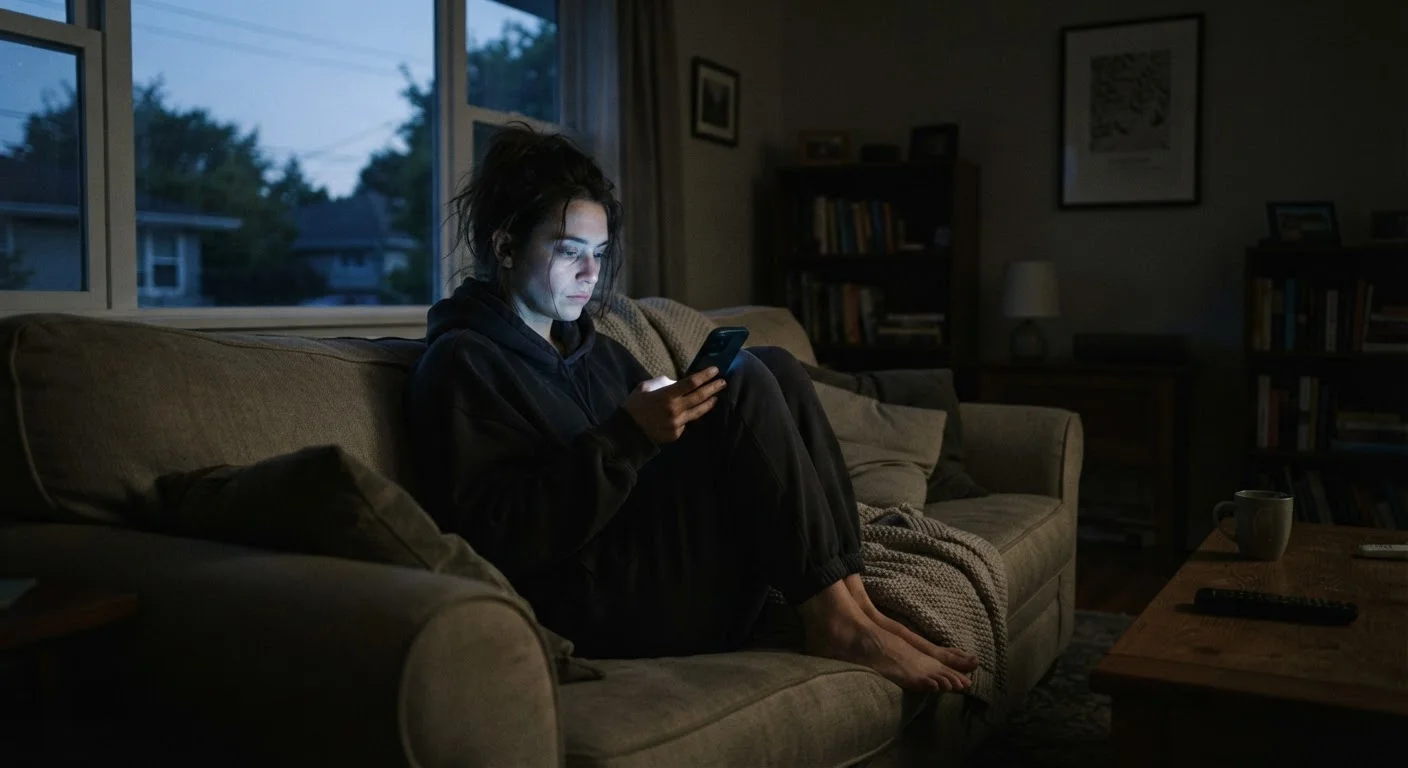
Passively scrolling news or social media for extended periods, especially before bed.
Why it happens: Digital content is designed to capture and hold attention. What begins as a brief check-in can stretch into a prolonged loop of negative or comparison-driven content with little awareness of time passing.
Slowly withdrawing from social contact when feeling low or overwhelmed.
Why it happens: When energy is low, socializing can feel like an additional demand rather than a resource. Canceling plans provides immediate short-term relief, making avoidance feel rational.
Using alcohol or substances habitually to manage stress or wind down.
Why it happens: Alcohol is widely normalized as a coping tool, and its short-term sedating effects can feel genuinely relieving after a difficult day. The association between stress and drinking is reinforced by both culture and chemistry.
Suppressing or dismissing emotions rather than processing them.
Why it happens: Many people are taught, implicitly or explicitly, that dwelling on emotions is unproductive or self-indulgent. Pushing feelings aside can feel like moving forward.
Neglecting any form of routine physical movement for extended periods.
Why it happens: Between work, caregiving, and other responsibilities, exercise often feels like a luxury that gets deprioritized when schedules tighten. It's easy to assume its effects are primarily physical.
It's worth noting that physical routines and emotional health are deeply intertwined. How you move, eat, and rest directly influences how you feel. Exercise, diet, sleep, and mood are more connected than most people realize - and habits that undercut one often undercut the others simultaneously.
When to Take It Further
Recognizing a harmful habit is genuinely useful - but it's a starting point, not a finish line. If you notice several of these patterns overlapping, or if they've been present for more than a few weeks, that's worth paying attention to. Signs that stress has crossed into something worth addressing can help you evaluate whether what you're experiencing warrants professional support.
1 in 5
U.S. adults affected by mental illness annually
According to the National Alliance on Mental Illness (NAMI), approximately one in five American adults experiences a mental illness in any given year.
~30%
Adults reporting insufficient sleep regularly
The CDC reports that roughly one-third of U.S. adults do not get the recommended seven or more hours of sleep per night on a regular basis.
Social connection deserves particular mention. Research consistently finds that isolation and loneliness carry measurable consequences for both mental and physical health. Even modest, consistent social contact can serve as a meaningful buffer. For a deeper look at the evidence, see what research consistently finds about social connection and mental health.
This article is for general informational purposes only and does not constitute medical or mental health advice. Always consult a qualified healthcare professional for guidance specific to your situation.