

Key Takeaways
- The paycheck-to-paycheck cycle is driven by both income gaps and spending patterns - often both at once.
- Debt obligations and the absence of an emergency fund are two of the biggest structural traps.
- Small, automated savings habits can interrupt the cycle even on a tight income.
- Understanding where your money actually goes is the necessary first step to any lasting change.
- Breaking the cycle is a process, not a single decision - progress matters more than perfection.
Paycheck-to-Paycheck Cycle
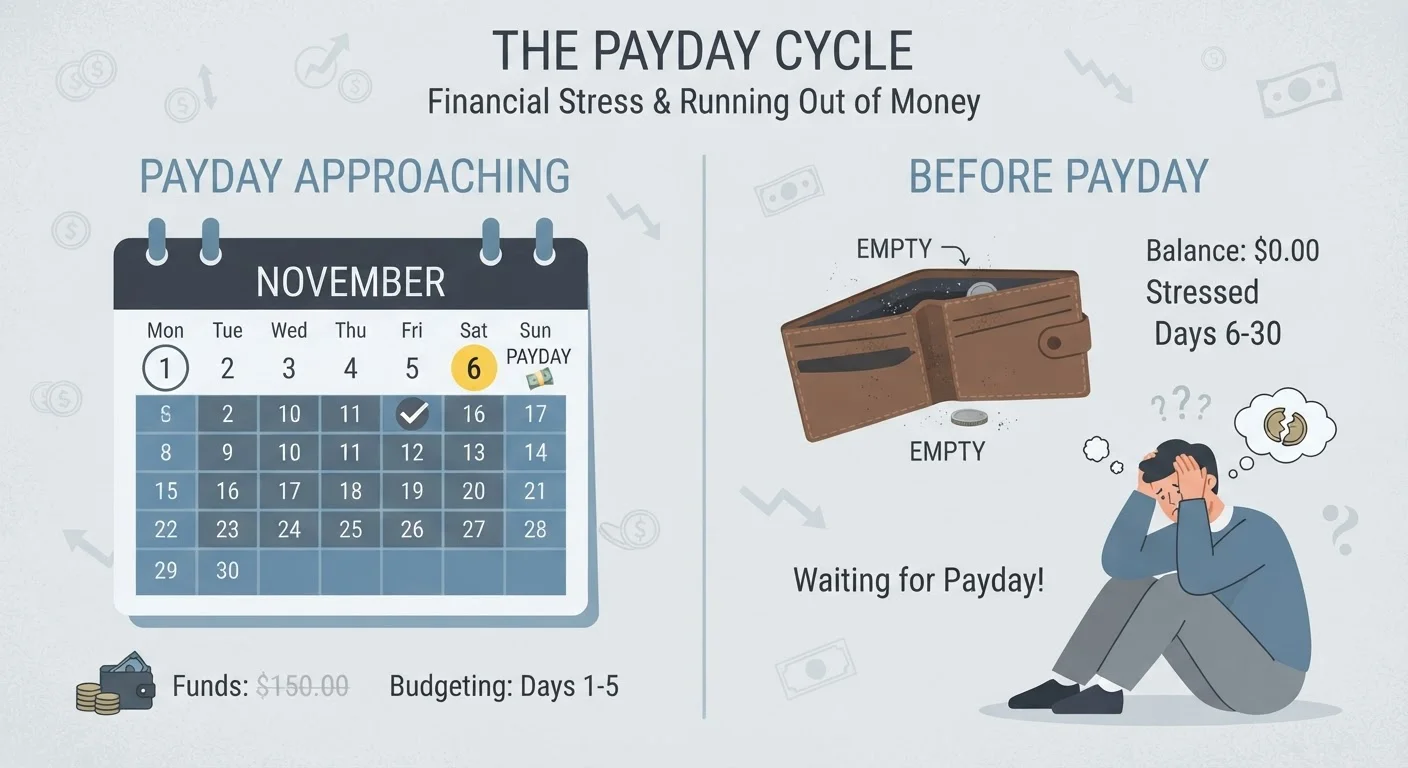
Living paycheck to paycheck means spending nearly all of your income before the next pay period arrives, leaving little or no financial cushion. It's a pattern where monthly expenses - including debt payments, housing, and everyday needs - consistently consume most or all of take-home pay. The cycle perpetuates itself because without savings, any unexpected cost forces borrowing, which adds to monthly obligations.
Economists distinguish between income-constrained paycheck-to-paycheck living (earnings genuinely can't cover necessities) and spending-pattern paycheck-to-paycheck living (income could support savings, but structural or behavioral factors prevent it). Both are common and require different solutions.
Why the Cycle Is Harder to Break Than It Looks
About 60-65% of American adults report living paycheck to paycheck at various points, according to surveys from multiple financial research organizations. What's striking is that this number holds across income brackets - it's not limited to low-wage workers. That alone tells you something important: the cycle isn't simply a math problem, and earning more doesn't automatically solve it.
The core reason the pattern persists is that it tends to be self-reinforcing. Without savings, a single unexpected expense - a car repair, a medical bill, an appliance that breaks - requires borrowing. That borrowing comes with interest, which increases monthly obligations. Higher monthly obligations leave even less room for saving. The cycle tightens.
Two structural factors do most of the damage: high fixed expenses relative to income and the absence of an emergency fund. When housing, transportation, debt payments, and utilities claim most of a paycheck before any discretionary spending happens, there's almost no margin for error. And without a financial cushion, every unexpected event becomes a crisis rather than an inconvenience.
Income Constraints Are Real - and Different
For some households, the paycheck-to-paycheck cycle is driven by wages that genuinely don't cover basic living costs in their area. No budgeting technique fully solves an income gap. In these situations, exploring options like income-based assistance programs, workforce development resources, or additional income streams may be more relevant than spending optimization alone. The strategies in this article apply most directly to situations where some margin exists but hasn't been captured.
The Role of Debt and Spending Patterns
Debt is often described as the engine of the paycheck-to-paycheck cycle. Monthly minimum payments on credit cards, personal loans, or medical debt consume income that could otherwise build a savings buffer. Over time, as interest accrues, more money goes toward interest rather than reducing the actual balance - a dynamic that can keep people financially stuck for years.
Spending patterns play an equally important role, and they're worth examining honestly. Subscription services, dining out, and convenience spending rarely feel significant in the moment, but they accumulate. Many people are surprised when they track their spending carefully - small, habitual purchases often account for hundreds of dollars monthly that weren't clearly visible before. This isn't about shame or judgment; it's about identifying room to maneuver. Common money myths - like believing minimum payments are manageable long-term - quietly slow progress in ways many people don't recognize until they run the numbers.
If your budget consistently feels impossible to stick to, the issue may be structural rather than motivational. Understanding why budgets fail can help you identify whether you're working against design flaws in your plan rather than a lack of discipline.
~62%
Americans living paycheck to paycheck
Multiple consumer financial surveys conducted in recent years have found roughly 60-65% of U.S. adults report living paycheck to paycheck at some point.
$400
Emergency expense many can't cover with cash
Federal Reserve research has consistently found that a significant share of U.S. adults would struggle to cover an unexpected $400 expense without borrowing or selling something.
3-6 months
Recommended emergency fund target
Financial educators widely recommend three to six months of essential expenses as a target emergency fund - a goal many paycheck-to-paycheck households have not yet reached.
Practical Steps That Actually Move the Needle
Breaking the cycle requires changing both the structure of your finances and some of the habits that sustain it. Neither happens overnight, but a few targeted steps have proven effective for many people navigating this situation.
- Track before you change. Spend one full month recording every transaction - even small ones. Patterns only become manageable once they're visible. Several free apps and spreadsheet templates make this straightforward, or a simple notebook works too.
- Automate a small savings transfer. Set up an automatic transfer of even $10-$25 per paycheck to a separate savings account. The amount matters less than the habit. Automation removes the decision from each pay period, which is where willpower tends to fail.
- Address the highest-cost debt first. High-interest debt - particularly credit cards - is usually the most damaging to cash flow over time. Directing any extra dollars toward the highest-rate balance reduces the total interest paid and eventually frees up monthly cash flow. If your debt repayment plan has stalled, common breakdown points in debt payoff plans are worth reviewing.
- Separate needs from fixed obligations. Some fixed costs - like a car payment or rent - are difficult to change quickly. Others, like streaming subscriptions or insurance premiums, may have room for adjustment. Identifying which is which gives you a clearer picture of where flexibility actually exists.
For those with variable income - freelancers, gig workers, or anyone whose pay fluctuates - the approach needs some adjustment. Budgeting on an irregular income covers strategies tailored specifically to unpredictable paychecks.
Once you've built early traction, the goal is to sustain it. Habits that support long-term budgeting are different from the initial setup - consistency requires its own set of practices. The Budgeting Basics hub offers additional foundational resources if you're building your financial footing from the ground up.
This article is for general informational and educational purposes only. It does not constitute personalized financial, legal, or tax advice. Consider consulting a qualified financial professional for guidance specific to your situation.