

Key Takeaways
- Driving uninsured is illegal in almost every U.S. state and can result in fines, license suspension, or vehicle impoundment.
- Even a brief lapse in coverage can trigger higher premiums when you seek a new policy.
- At-fault accidents during a lapse leave you personally responsible for all costs - medical bills, repairs, and legal fees.
- Many insurers notify your state DMV automatically when a policy is canceled or lapses.
- Restoring coverage promptly limits the damage - the longer the gap, the steeper the consequences.
Insurance Lapse
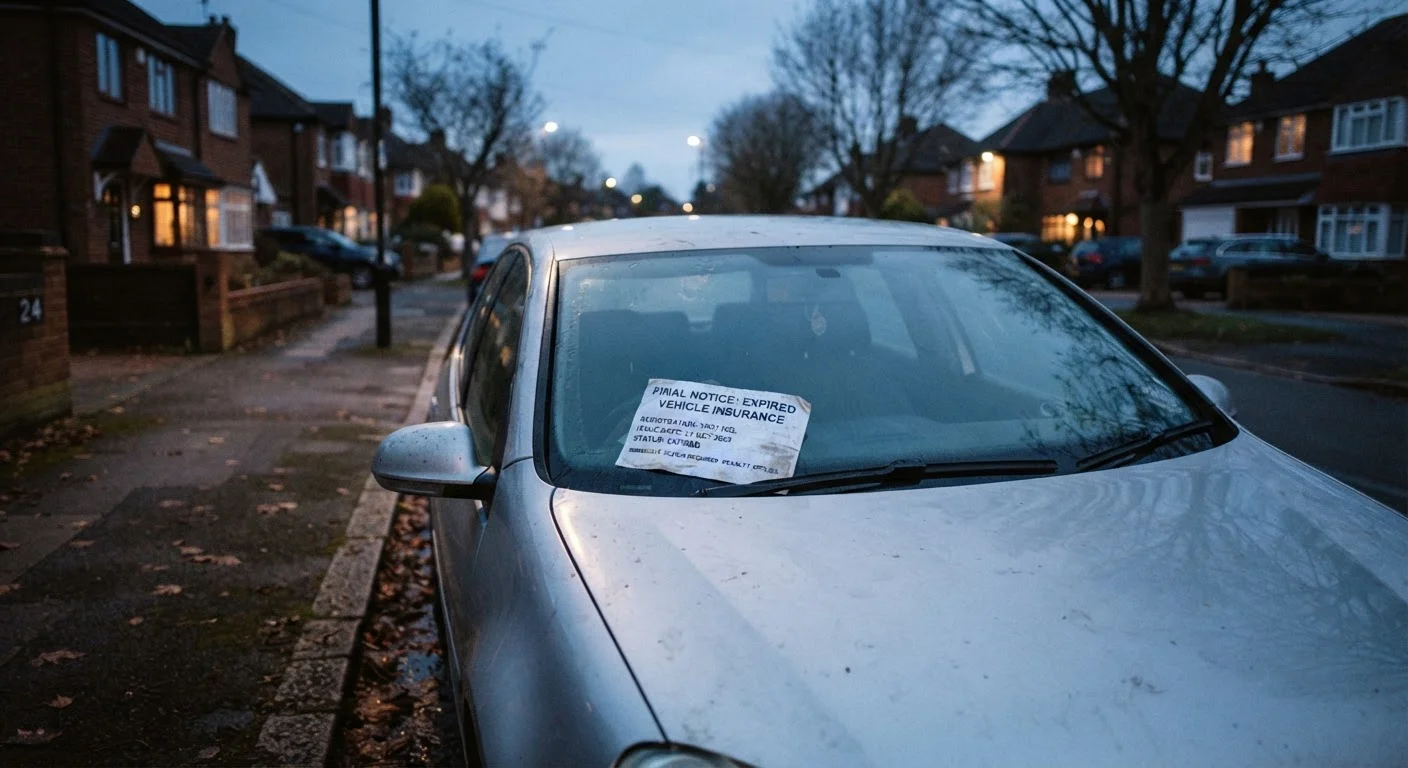
A car insurance lapse occurs when your auto insurance policy expires or is canceled and you have no active replacement coverage in place. This gap - even one that lasts only a day or two - means you are driving without the legal protection required in nearly every U.S. state. The consequences range from fines and license suspension to dramatically higher premiums when you try to get covered again.
Insurers and state DMVs track coverage continuity; a lapse is formally recorded when your prior policy's end date is not immediately followed by a new active policy start date.
Why Insurance Lapses Happen - and Why They Matter
Most insurance lapses aren't intentional. A missed payment, a bank account change, or the confusion of moving between policies can all create an unintended gap. But from a legal standpoint, intent doesn't matter - what matters is whether active coverage exists the moment you're on the road.
Nearly every U.S. state requires drivers to carry at minimum a liability insurance policy. That requirement exists to protect not just you, but other drivers, passengers, and pedestrians who could be harmed if you cause an accident. When that coverage disappears, even briefly, the legal and financial guardrails disappear with it.
For new or first-time owners especially, keeping track of renewal dates and payment schedules is critical. The First-Time Car Owner's Roadmap covers insurance deadlines alongside other essential ownership obligations new drivers often overlook.
Grace Periods Are Not a Safety Net
Many drivers assume their insurer's grace period provides a comfortable buffer after a missed payment. In practice, grace period lengths vary widely - from a few days to a month - and some policies have no grace period at all. Relying on an assumed grace period without confirming it in your policy documents is a common reason drivers find themselves unexpectedly uninsured.
The Immediate Legal Consequences
The first category of consequences is legal exposure. Driving without insurance is a moving violation in most states, and if you're stopped by law enforcement while uninsured, you could face:
- Fines - ranging from a few hundred to over a thousand dollars depending on the state
- License or registration suspension - many states suspend both until proof of coverage is provided
- Vehicle impoundment - some jurisdictions will tow your car on the spot
- SR-22 requirements - certain states require you to file an SR-22 form (a certificate of financial responsibility) for several years after a lapse-related violation, which itself increases your insurance costs
Beyond traffic stops, many state DMVs now receive automated electronic notification from insurers the moment a policy is canceled or expires without renewal. This means the state may flag your registration before you've even driven anywhere.
The Financial Risk of an At-Fault Accident
The most serious risk during a lapse isn't a fine - it's an accident. If you cause a collision while uninsured, you are personally responsible for every dollar of damage. That includes the other driver's vehicle repairs, their medical treatment, lost wages, and any legal costs if they pursue a claim against you.
Medical bills from a moderate accident can run into tens of thousands of dollars. A serious injury claim can exceed six figures. Without liability coverage in place, those costs fall entirely on you - and you can be sued personally to recover them.
To understand exactly what each coverage type protects against, see our overview of auto insurance coverage types - particularly the liability and medical payments sections.
How a Lapse Affects Your Future Premiums
Even after you restore coverage, the lapse follows you. Insurers use coverage history as a factor in calculating risk, and a gap - regardless of how it happened - signals to underwriters that you may be a higher-risk customer.
1 in 8
U.S. drivers estimated to be uninsured
According to the Insurance Research Council, roughly one in eight drivers on American roads is uninsured at any given time.
~10-30 days
Typical insurer grace period before cancellation
Grace period lengths vary significantly by insurer and state; policyholders should verify their specific terms in writing.
Drivers who have had a lapse often find that they're quoted rates significantly higher than those with continuous coverage, and some preferred-tier insurers may decline to offer a policy at all. The longer the gap, the more pronounced this effect tends to be.
Shopping for a new policy immediately after discovering a lapse - rather than waiting - is the most practical way to minimize this impact. The shorter the gap, the less leverage it has on your future premium calculations.
What to Do If Your Coverage Has Already Lapsed
If you've realized your coverage has lapsed, act promptly. Here's what's generally advisable:
- Stop driving - until you have active coverage in place, every trip carries compounded legal and financial risk.
- Contact your current or former insurer - ask whether your policy can be reinstated without a full new application. Some insurers allow this within a short window after a missed payment.
- If reinstatement isn't available, shop for a new policy immediately - be transparent about the lapse on your application; misrepresenting coverage history can void a future claim.
- Check your state DMV's requirements - depending on your state, you may need to file proof of new insurance to restore a suspended registration.
Understanding your policy's grace period, cancellation notice terms, and reinstatement conditions before a problem occurs is the most reliable way to avoid a lapse altogether. Those details are usually found in your declarations page or policy documents - the same kind of careful reading that applies to any insurance policy, whether for your vehicle or your home.
This article provides general information about car insurance lapses for educational purposes only. Insurance laws, penalties, and requirements vary by state. Consult your insurer and your state's DMV or department of insurance for guidance specific to your situation.